
Background
Replacing the Black Hawk Bridge at Lansing demanded more than a new river crossing. Project complexity, regional importance, and public visibility raised risk from the outset. Built in 1931, the existing bridge no longer supported modern freight, safety, or navigation needs. Federal inspections classified the structure as deficient, making replacement unavoidable and placing added pressure on project coordination.
Iowa Department of Transportation selected this effort as its first full-scale digital bridge delivery, signaling a shift in how major structures move from concept to construction. Our team joined the project to lead modeling and digital delivery, providing a shared digital foundation to support designers, contractors, inspectors, and agency staff. Clear information flow and early issue resolution became essential goals for a crossing that serves as the only Mississippi River bridge within 30 miles.
Approach
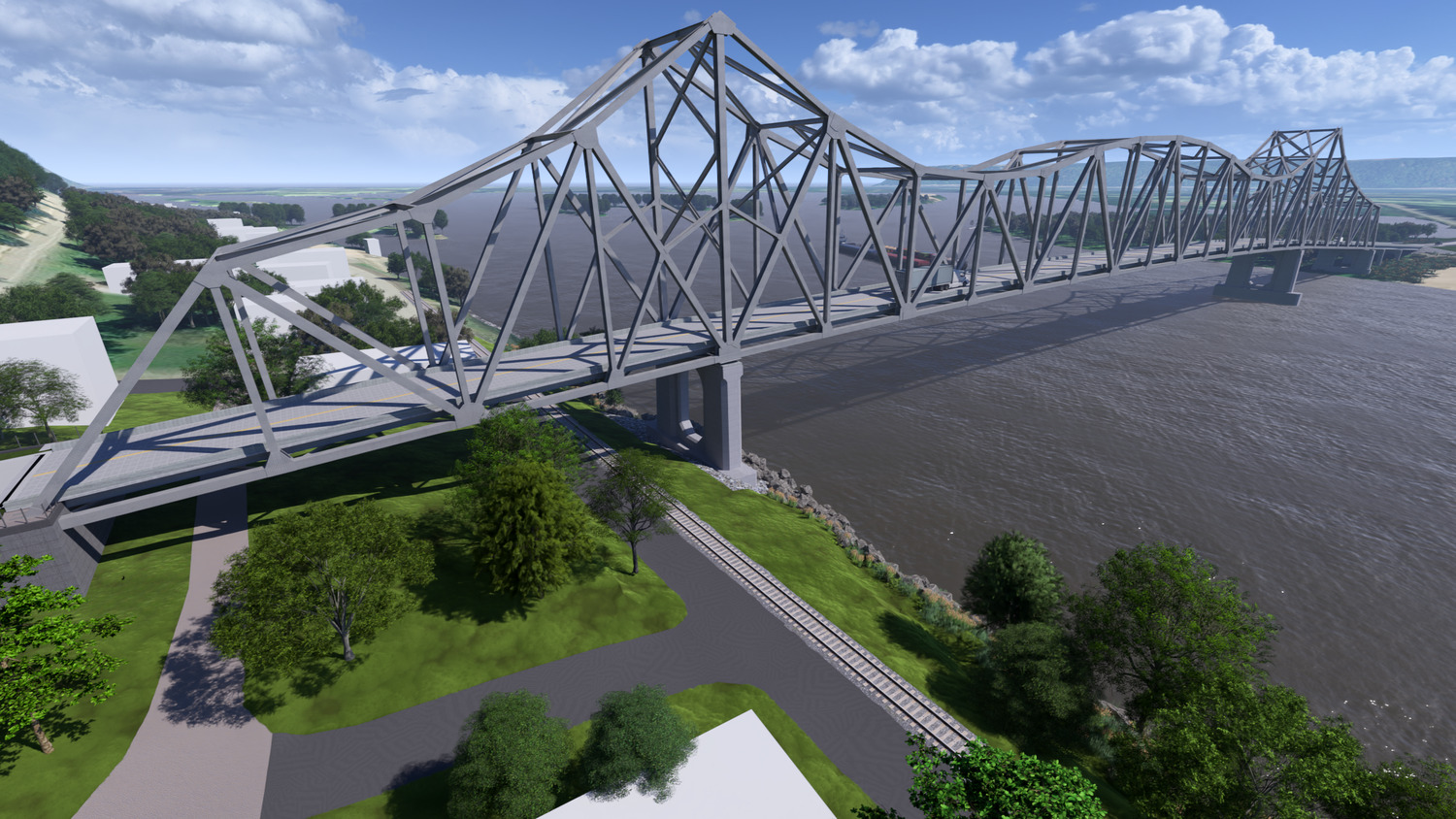
Our team developed and managed a comprehensive three-dimensional model that anchored digital delivery across the project lifecycle. The model captured structural steel, connections, reinforcement, and foundations at a high level of detail, allowing teams to visualize complex geometry and construction sequencing beyond traditional drawings.
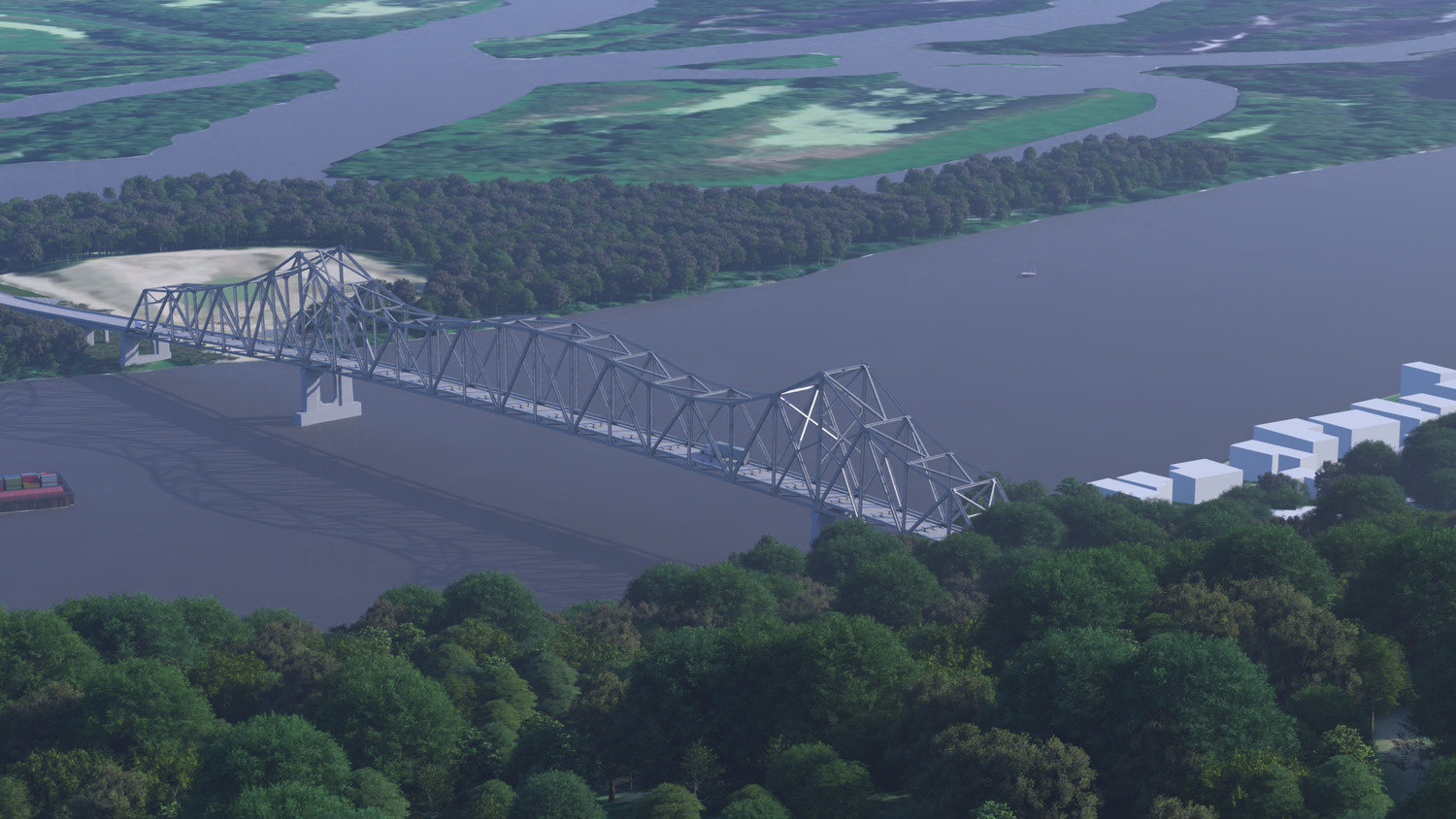
Cloud-based access expanded the model’s reach and value. Designers, fabricators, contractors, and inspectors reviewed coordinated information through a web-based platform, improving alignment without specialized software. Rapid updates kept teams working from current data, while integrated issue tracking supported faster resolution. Visualization tools also supported public outreach, helping communities understand how the new bridge fits the historic Mississippi River setting.
Results
Model-based delivery improved clarity during bidding and construction. Contractors used the model to better understand scope, quantities, and sequencing, which reduced uncertainty and supported competitive pricing. Field teams relied on detailed visualization to plan deep foundation pours and truss assembly, improving safety and efficiency during complex work.
Digital delivery also produced measurable benefits. Early conflict resolution and improved constructability contributed to an estimated 1.5-month schedule reduction and approximately $3.2 million in cost savings. Long-term value continues beyond construction, as the Iowa DOT can use the model to support inspections, access planning, and asset management. Proven workflows from this project now inform future digital delivery efforts on large, complex bridges.
“I don’t think I realized how powerful the model was going to be in the overall process of building this project. I’m thankful the owner decided to make the investment.” – David Stanke, Vice President and Area Manager for Kraemer North America


Markets: Departments of Transportation
Services: Geospatial and Geophysical, Technology, Transportation Services
Related Projects