

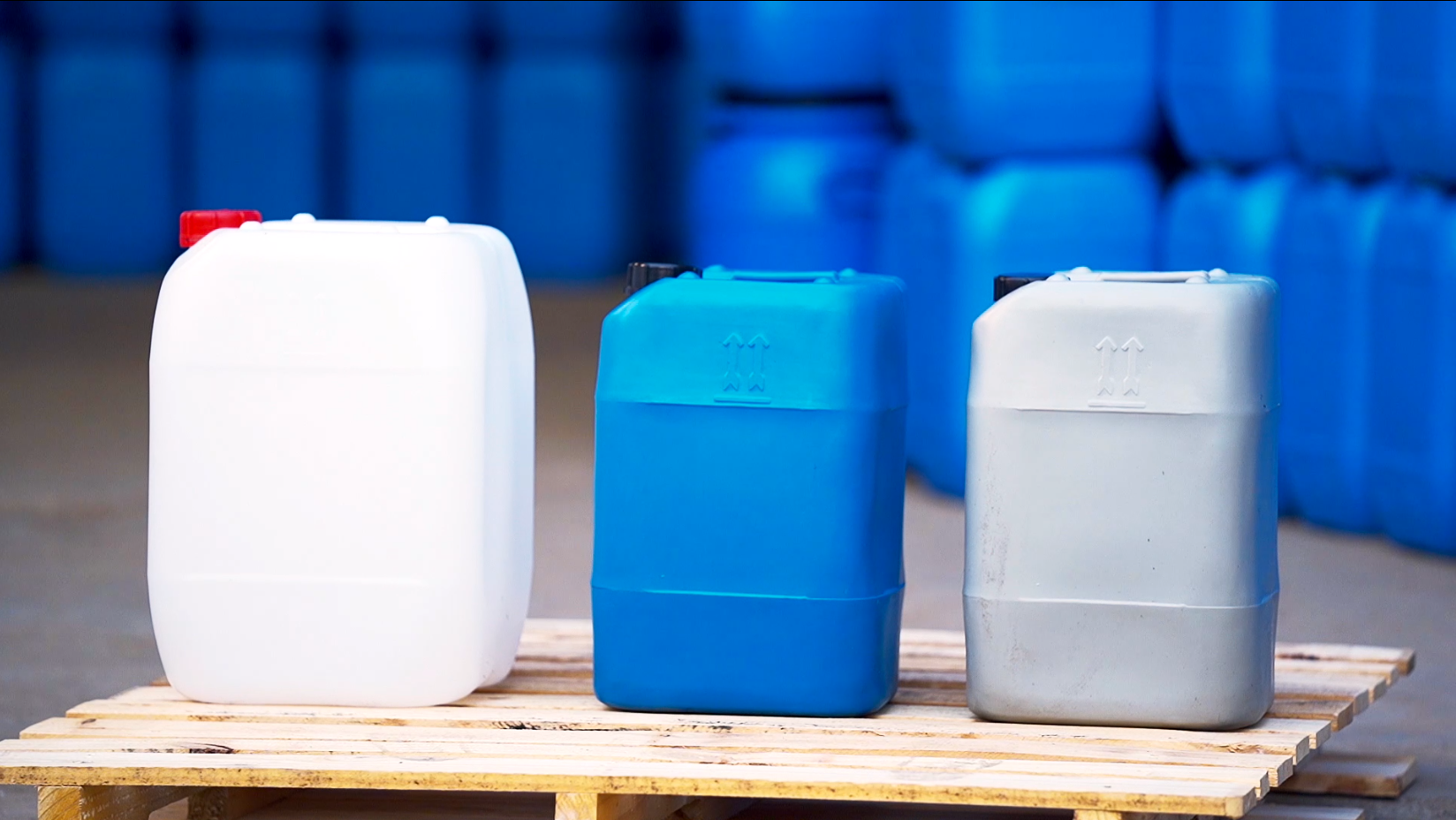
When manufacturers think about hazardous materials, they often picture highly specialized industrial substances. These materials require the utmost precautions, but in reality, some of the most significant hazards are common facility cleaning chemicals.
Although products used to clean floors, sanitize equipment, or support production may seem harmless, in larger quantities or in concentrated form these chemicals can create building code violations and significant safety threats. Many substances are corrosive, some are oxidizers, and others may be flammable or combustible depending on their composition and concentration.
Making changes to a facility when these products are present creates a challenge because the risks are frequently underestimated until the design process is well underway. By that point, what looked like a simple operational decision can become a major facility planning issue. Here’s how manufacturers can help streamline the design process while safeguarding their employees and property:
Identify Chemicals Properly
As early as possible during the project planning phase, identify what chemicals are on site and obtain the Safety Data Sheets (SDS) provided by the chemical manufacturer. Using these resources, the design team can determine whether each material is classified as corrosive, oxidizing, flammable, combustible, toxic, or highly toxic. In food production facilities, most stored chemicals are corrosive. Some materials may be a combination of two or more hazards.
Determine Maximum Allowable Quantities
Once the design team knows what types of materials are present, it is crucial to know how much of each material will be present in the building, including materials planned for future use. Building codes evaluate these materials against maximum allowable quantities for each control area.
If amounts remain below those thresholds, the facility can typically retain its primary occupancy classification. If they exceed them, however, the space may be reclassified as a hazardous occupancy, or Group H. That change is significant. Exceeding allowable quantities can affect far more than a single room, leading to architectural, mechanical, electrical, and life safety changes across the project. It may also trigger requirements for rated separations, reduced exit travel distances, outward-swinging doors, panic hardware, dedicated ventilation, backup power, containment, and specialized fire alarm and sprinkler systems.
Note that the location of storage areas within the building can also be impacted by the H-use classification. Depending on the hazard classification, these areas may need to be located on the perimeter of the building.
Know How Material Will Be Stored
Determining whether material will be stored in drums, totes, tanks, or another system is crucial because storage volume drives many code decisions.
Manufacturers often say they do not keep much on hand, only to later reveal plans for a 2,500-gallon tank to simplify supplier deliveries. Such a late-in-the-game revelation can reshape the facility design.
A decision that seems cost-effective from an operations or procurement perspective may create substantial capital costs elsewhere. Buying larger volumes less frequently may reduce delivery costs but, again, if that storage exceeds a code threshold, the facility may require systems and other changes that were not in the original budget. The earlier the project team understands these details, the better it can balance operational efficiency, code compliance, and total project cost.
A Better Path Forward
A facility design project that begins with accurate and complete information about hazardous materials establishes a solid foundation for informed decision-making, improved safety, and efficient project execution for product manufacturers.
OSHA compliance is ultimately the responsibility of the facility owner or operator, but knowing what chemicals are being used, in what quantities and concentrations, and how these chemicals will be stored allows Foth’s project and safety teams to avoid surprises, reduce risk, and develop facilities that are safer, more resilient, and better aligned with our client’s goals.
Thoughtful design begins with understanding what is really in the building.
Markets: Consumer Products, Food and Beverage, Manufacturing and Industrial Products, Pulp and Paper
Services: Design-Build / Alternative Project Delivery, Distribution Logistics Systems, Engineering for Product Manufacturing, Manufacturing Reshoring
Related Insights

How Food Facility Design Can Improve Allergen Control and Prevent Cross-Contact
Author: Mark E. Redmond, P.E.

Creating a Culture of Belonging: Why Relationships Matter During Onboarding
Author: Margaret Baltus, Senior Organizational Development Leader


